
Freedom of Information in Practice
Date: 22.05.2026, 9:00 a.m. – 12.00 p.m. Venue: Room L621, 6th floor | Faculty of Law | Sigmund Freud University | Lassallestraße 3, 1020 Vienna
Programme
09:00 Konrad Lachmayer: Introduction
09:10 Tiago Fidalgo de Freitas: The Portuguese model of administrative transparency at the crossroads
09:50 Matthias Schmidl: Freedom of Information and Data Protection – Two Sides of the Same Coin
10:30 Coffee Break
10:45 Maria Bertel: The Future of Freedom of Information
11:30 Konrad Lachmayer: Conclusion
12:00 End of the Workshop
The workshop explores contemporary challenges of freedom of information, transparency and the protection of fundamental rights in a comparative perspective. Bringing together scholars and practitioners from Portugal and Austria, the discussion will examine how access to public information is implemented in practice and how transparency obligations interact with competing legal interests, particularly data protection and privacy. A contribution on the Portuguese model of administrative transparency provides insights into the functioning of long-standing oversight mechanisms and current challenges to effective access to information. Comparative perspectives from Austria address the recently introduced Freedom of Information Act, which only entered into force in September 2025 and therefore already allows for initial practical experiences and reflections on its implementation. Particular attention is also paid to the relationship between transparency and data protection in administrative practice. .
Please register until 21.05.2026: konrad.lachmayer@jus.sfu.ac.at
Presentations
Tiago Fidalgo de Freitas
The Portuguese model of administrative transparency at the crossroads
The Portuguese Constitution entrenches the right of access to administrative information as a constitutional fundamental right. To implement this right, the Portuguese Law on Access to Administrative Documents was first approved in 1993 and the Commission on Access to Administrative Documents was created in 1994, with its first opinion having been delivered the following year. After more than three decades of existence, with several thousands of opinions delivered, the model is tested and seems to have passed the test of effectiveness. Indeed, more than 86% of the opinions are followed by the public administration, despite its non-binding effect. However, information commissioners (and other independent oversight bodies) and transparency regimes currently face significant challenges and the Portuguese ones are no exception. On the political end of the spectrum, the rise of populism and the spread of disinformation, especially through social networks, undermine the ability of transparency to function as an instrument of democratic accountability. Similarly, the advent of artificial intelligence also raises questions about the democratic control of administrative authorities. Finally, from the legal side, the extensive interpretations made of data protection regimes have, the heavy sanctions foreseen therein and the extensive powers given to data protection supervisory have created uncertainty in public bodies, prompting approaches that are either conservative or inappropriately restrictive regarding access to information. I will tackle these challenges and identify alternative paths to overcome them.
Matthias Schmidl
Freedom of Information and Data Protection – Two Sides of the Same Coin
The right to protection of personal data is enshrined in the Austrian Constitution since 1980. The right to access to information is part of the Austrian Constitution since 2025. Whereas there is a long legal tradition of data protection in Austria, there is no tradition of freedom of information. Both fundamental rights are two sides of the same coin, they are mutually exclusive – only one can prevail in case of conflict. The right to access to information restricts the right to data protection and vice versa. This poses several problems for authorities when they have to decide on access requests.
The Austrian Data Protection Authority is entrusted with certain tasks under the Freedom of Information Act. However, it is not an Information Commissioner that decides in case of conflict of those two rights.
In my intervention I will explore the role of the Austrian Data Protection Authority under the Freedom of Information Act and under the General Data Protection Regulation and whether the right to data protection unduly restricts the right to freedom of information.
Maria Bertel
The Future of Freedom of Information
The constitutionally guaranteed right to freedom of information and the requirement for certain information to be published, regardless of whether a specific request has been made, make the Austrian system highly transparent. This is reinforced by the broad scope of freedom of information, which binds not only the administration, but also, in some cases, the courts and the legislature. Although the purpose of transparency has essentially remained unchanged over the centuries, this presentation will consider whether the current means are still appropriate in an increasingly digitalised system. This raises questions about whether algorithms can be classified as ‘information’ in the context of freedom of information and about the legal nature and function of the information register.
The question that needs to be answered is how freedom of information should evolve in a digital society.
Biographies
Professor Dr. Maria Bertel
University of Graz (Austria)
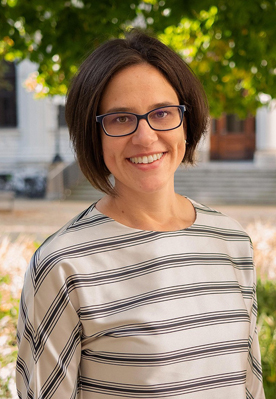 Maria Bertel is Professor of Public Law and Digitalization at the Institute for Public Law and Political Science at the University of Graz; she has held this position since October 2023 and has served as the Institute’s Director since November 2024. Prior to that, she held a professorship in public law with a focus on administrative law at the same institute. Maria Bertel completed her habilitation in June 2022 at the University of Innsbruck with a dissertation thesis on the “Principle of Efficiency in the Austrian Federal Constitution” which she authored as part of an Elise Richter position funded by the FWF at the University of Innsbruck, Institute for Public Law, Political Science, and Administrative Studies (April 2016 – August 2021). She also held a postdoctoral fellowship at Central European University in Budapest (April 2018–April 2019).
Her research interests lie particularly at the intersection of sustainability and digitalization, as shown in her current research projects “HeriSol – Prosumer Solutions for Heritage Buildings based on BIPV” (European Union [CETPartnership]/FFG, GA N°101069750, CETP-2023-00326) and “Law and Ethics of Innovation: Rethinking Progress in Crises” (FWF, Grant DOI 10.55776/TAI4242025).
Professor Dr. Tiago Figadlo de Freitas
University of Lisbon (Portugal)
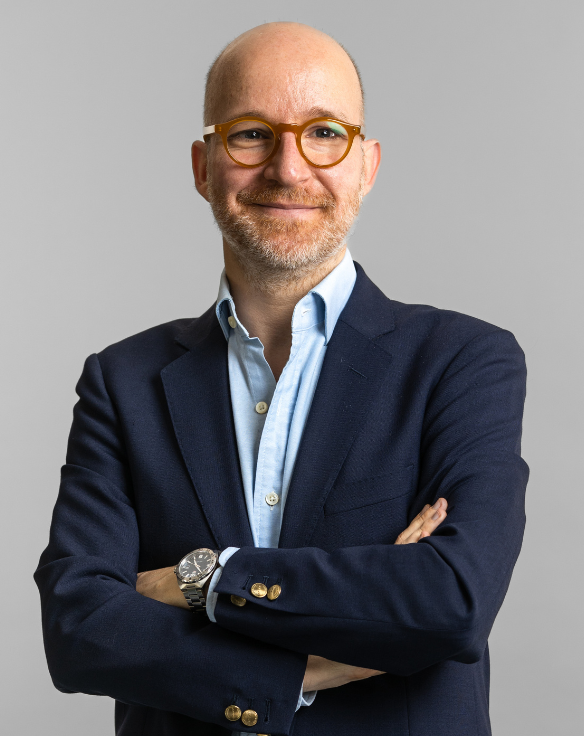 Tiago Fidalgo de Freitas is a Guest Lecturer at the University of Lisbon School of Law and Researcher and Executive Coordinator of the Lisbon Public Law Research Centre. He also serves as Information Commissioner at the Portuguese Information Commission on Access to Administrative Documents, elected by the Portuguese Parliament, and Senior Advisor at the Legal Service of the Portuguese Government. He also provides legal advice to Portuguese, foreign and international authorities. Tiago has published and participated in scholarly conferences and workshops in the fields of Constitutional Law and Constitutional Justice, Fundamental Rights, and Public International Law, both nationally and internationally. He has also focused part of his research in the Law and Practice of Transparency and Integrity.
Prof. Dr. Konrad Lachmayer
Faculty of Law, Sigmund Freud University Vienna (Austria)
 Konrad Lachmayer is Professor of Public, European and Comparative Constitutional Law, Vice-Dean for research and Director of Studies of an LL.M. programme on “Public International Law” in collaboration with UNITAR at Sigmund Freud University, Faculty of Law, in Vienna. His research focuses on comparative public law, academic freedom and Austrian and European public law.
Dr. Matthias Schmidl
Austrian Data Protection Authority
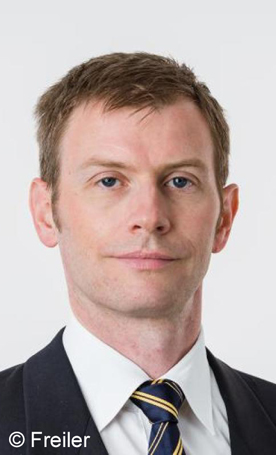
- Born January 5th, 1983
- studied law at the University of Vienna and the Rijkuniversiteit Groningen (ERASMUS), graduation as Magister iuris (Mag. iur) in 2006 and as Doctor of law (Dr. iur.) in 2008
- entered the civil service in 2007
- 2007–2011 research assistent at the Austrian Supreme Administrative Court (2010: 3 months internship at the then European Civil Service Tribunal in Luxembourg)
- 2011–2012 desk officer in the Constitutional Service/Austrian Federal Chancellery
- 2011–2013 desk officer in the former Austrian Data Protection Commission
- 2014–2023 Deputy Director of the Austrian Data Protection Authority; Austrian representative in the Council of Europe Advisory Committee on Data Protection (T-PD) until 2016
- since 2024 Director/Commissioner of the Austrian Data Protection Authority; Austrian representative in the EDPB
- lecturer for data protection law at the University of Vienna, University of Graz, Danube University of Krems and University of Applied Sciences Wiener Neustadt
- Head of Department AI and Data Protection at the Institute for Digital Transformation and AI, Sigmund Freud University of Vienna